What a bandsaw injury costs your business

A bandsaw injury is rarely a single expense. The medical bill is the part everyone sees; the rest arrives over the following months as downtime, an inspection, a workers' compensation claim, retraining, and people leaving. This is a look at what one incident actually costs an operation, and at the handful of conditions that drive most of them.
How often this happens
Guardian analyzed OSHA's severe injury reports from 2015 to 2025 and identified 919 severe bandsaw injuries — amputations and in-patient hospitalizations only, in the states that report federally. That is roughly one severe injury reported every four days, and 94% of them strike fingers or thumbs. Most happen on guarded, compliant machines during ordinary cuts. Read the full analysis.
Two findings from that dataset matter directly to the cost question. The official count is a floor rather than a total, because only the most severe outcomes are reportable and only some states report federally. And a bandsaw report is unusually likely to bring an inspector: 62% of the bandsaw records carry an OSHA inspection number, close to twice the baseline across all severe injuries.
The direct costs
These are the ones that reach the ledger quickly:
- Emergency treatment, surgery and follow-up care
- Workers' compensation, and its effect on your experience modifier for years afterwards
- Rehabilitation, and any accommodation the employee needs to return
- Legal costs, where a claim follows
- Any OSHA citation — see complying with OSHA bandsaw safety regulations for the current penalty levels and what an inspector examines
The costs that do not appear on an invoice
The indirect costs are usually the larger number, and they are the ones budgets miss:
- Lost production. The line stops, and it stays stopped through the immediate response and the investigation.
- The inspection itself. An inspector on site rarely looks at only the machine involved, so other equipment is exposed to further citations while they are there.
- Management time. Reporting, investigation, corrective actions, documentation, insurer and regulator correspondence.
- Recruitment and retraining. A trained operator is out, and someone has to be brought up to the same standard.
- Retention and morale. The people who saw it happen make their own judgment about whether the job is safe. In work with high turnover, that judgment is expensive.
- Reputation. With customers, with auditors, and with the people you are trying to hire.

What drives the risk
The severe-injury narratives cluster around a small number of conditions, and none of them require anyone to behave recklessly.
Fatigue and attention, not carelessness
Training and supervision matter, and they are the foundation. But the dominant narrative in the data is a normal feed on a familiar machine where the material gives and the hand follows through. Long shifts and production pressure make that more likely; they do not make the operator negligent.
Dull blades and missing teeth
A dull blade invites force, and force is what turns a slip into a serious injury. Blade condition, tension, and tracking belong on the pre-start check for exactly this reason.
Gloves and loose clothing
A glove, sleeve or apron caught by the blade is the second most common narrative in the data, and it pulls a hand in faster than anyone can react. Where gloves are required, they must fit snugly, and loose clothing, jewelry, and drawstrings have no place at the machine.
Nothing between the hand and the blade
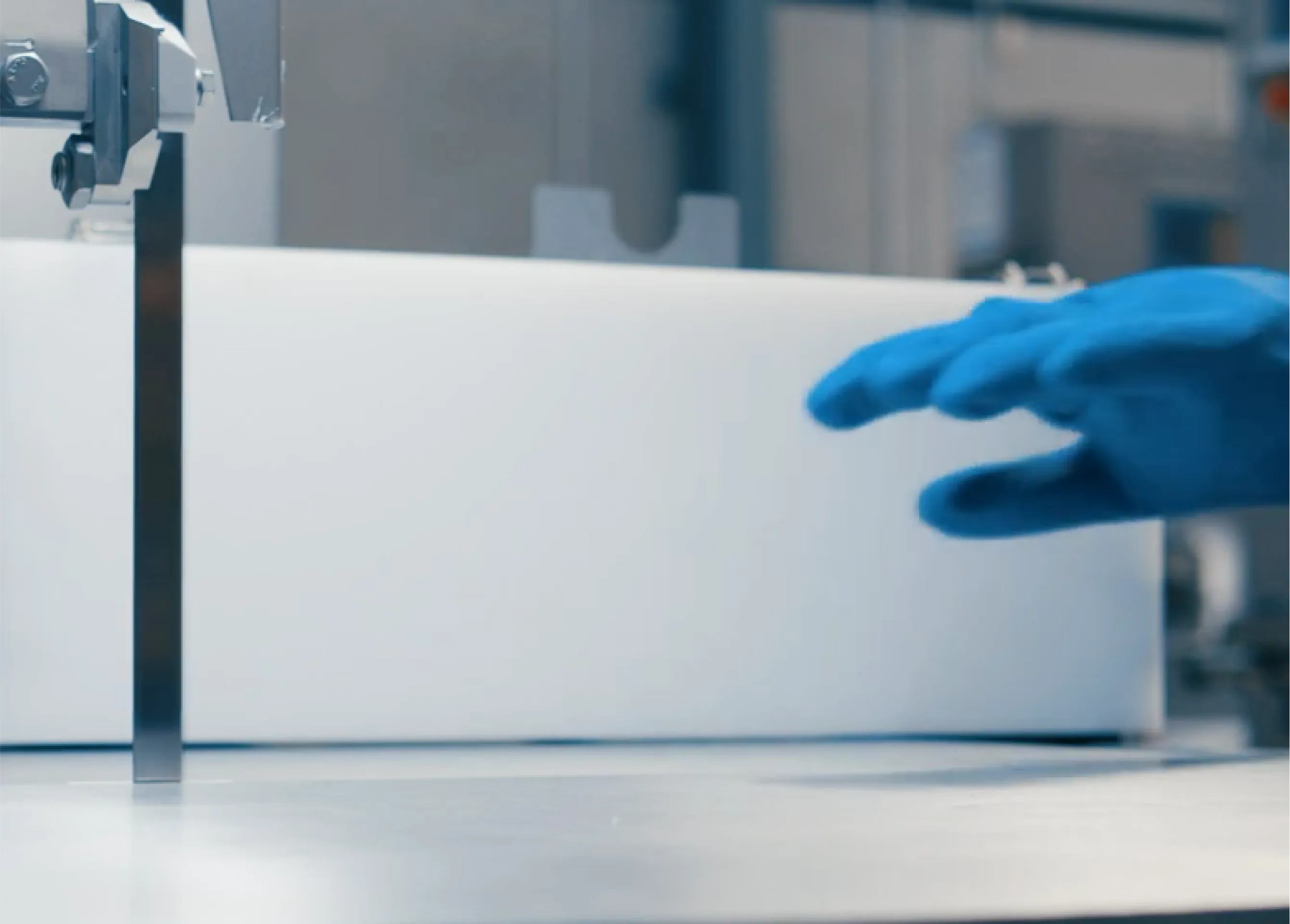
Guarding is required, and it works, but the standard permits the point of operation to stay open, because material has to reach the blade. Without something covering that zone, the whole of the residual risk rests on the operator not slipping. For the operating controls that reduce it, see the bandsaw safety rules.
The cost of prevention, by comparison
Blue Sky Pastures processes up to 30,000 lambs a week near Invercargill, New Zealand, with boning and cutting rooms running 20 hours a day in peak season. Before moving to Guardian bandsaws they were seeing one to two bandsaw injuries a year. As CEO Todd Grave put it, “our only line of defence was training — but when you are doing that many hours on a bandsaw, human error creeps in.” After the rollout, they recorded their first full year with no bandsaw injuries. Read the case study.
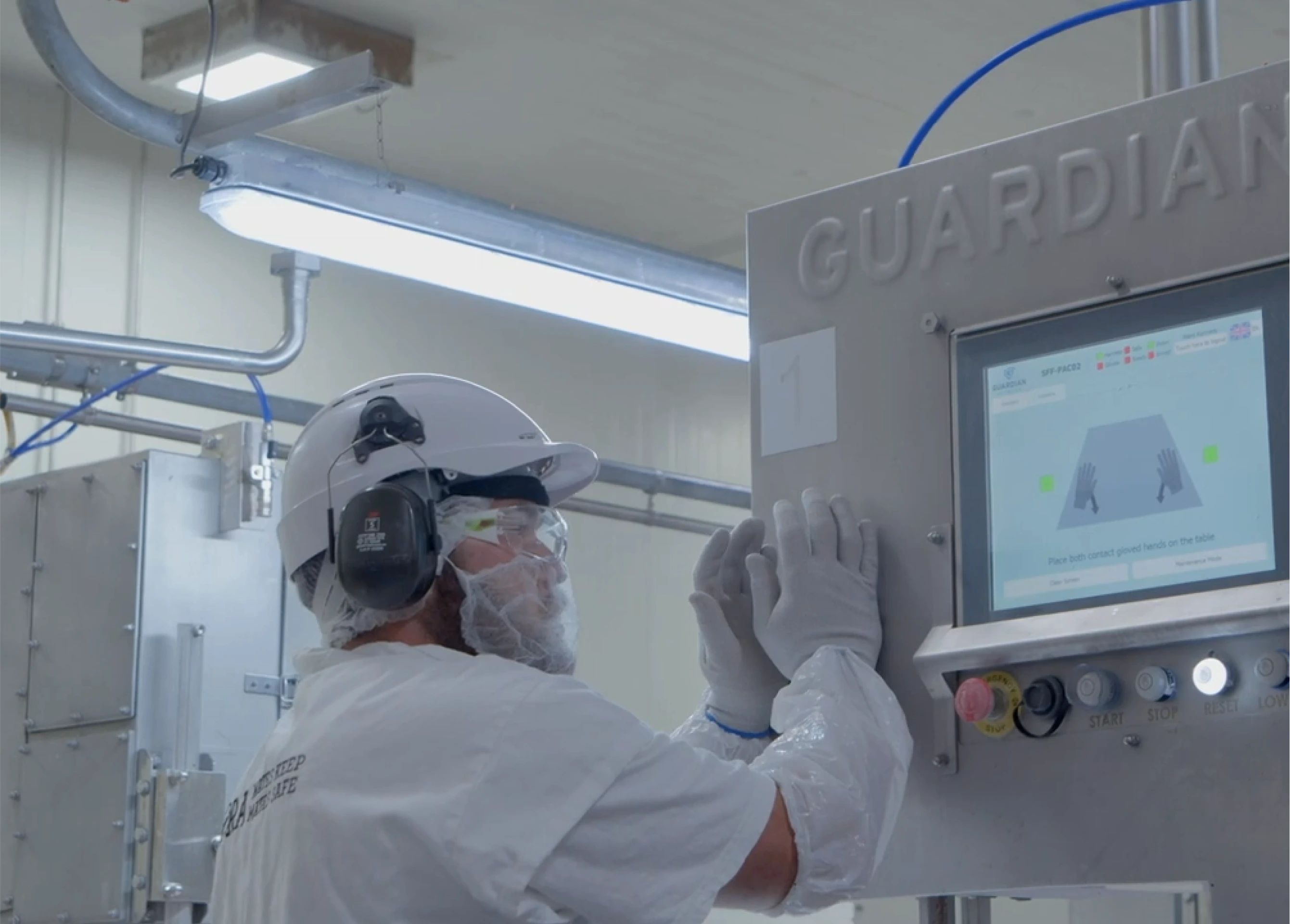
That is the comparison worth running. Guardian's vision system watches a three-dimensional zone around the blade and stops it in about 12 milliseconds when a gloved hand crosses into it — before contact, not after. Set the cost of that against one amputation, with everything above included, rather than against the price of a conventional saw.
If you want help modeling it for your own run hours and headcount, get in touch with the team at Guardian.