How to choose a butcher bandsaw


A butcher bandsaw is a long-term purchase that has to fit three things at once: the cuts you make, the room you have, and the people who will stand at it every day. This guide works through what to check before you buy, in the order most buyers need to decide it.
Cutting capacity: start with the biggest thing you cut
Capacity is the first filter, and it is the one people get wrong by measuring the average cut rather than the largest one. Two numbers matter: the height of cut (the gap between the table and the upper guide at its highest setting) and the throat depth (the distance from the blade to the frame, which sets how wide a piece can pass). Measure the largest primal, carcass section or bone-in piece you handle in a peak week, not a normal one, and buy above it.
Under-buying here is expensive in a way that does not show up on the quote: operators start turning and forcing oversized pieces through a saw that cannot take them, which is exactly the handling that puts hands near the blade.
Footprint and layout
In a retail meat room or a small butchery, space is usually the binding constraint. Check the floor footprint, but also check the working envelope: how much clearance the operator needs behind and beside the machine, which side the offcut falls, and whether the saw can be reached from the wash-down side.
For reference, the Guardian Lite measures 32.4″ (W) x 30″ (L) x 81.3″ (H), which is sized for exactly this situation — a compact machine with a 3HP motor rather than a small motor in a small frame.
Motor and duty cycle
Power matters less as a headline number than as a question of duty: how many hours a day will this saw run, and through what. A motor that is comfortable with bone and frozen product holds cutting speed through the cut, which gives you even cuts and less operator effort. A motor working at its limit stalls, heats and shortens the machine's life, and it teaches operators to push.
Ask the supplier what the machine is rated to run continuously, not just what the motor is rated at.
Blade selection and tooth pitch for meat
Blades are consumables, and the wrong one makes every other problem worse. The rule that governs pitch is simple: keep at least three teeth in the material at all times. Too coarse for the thickness and each tooth takes too big a bite, so the blade snags and the workpiece jerks; too fine and the gullets pack, the blade heats and dulls, and the operator starts forcing the feed.
Meat and bone work generally calls for a coarser pitch than metal cutting, but the correct number depends on what you are actually cutting through — boneless product, bone-in, or frozen — and blade suppliers publish a pitch chart for exactly this. Match the chart to your thickest routine cut, and check that the blade you need is stocked and quick to get.
Cleaning and sanitation
Meat-cutting equipment has to be broken down, cleaned and sanitized on a schedule, and food safety rules require it. This is a daily labour cost, so how quickly the machine strips matters: look for parts that come off without tools, surfaces that do not trap product, and a wash-down rating appropriate to how the room is cleaned. A saw that takes twenty minutes longer to clean each night costs more than the price difference on most quotes.
Safety features in a meat room
Every bandsaw needs its guards in place and its upper guide set close to the workpiece, and no purchase changes the basics of safe operation — the bandsaw safety rules apply to every machine on the market.
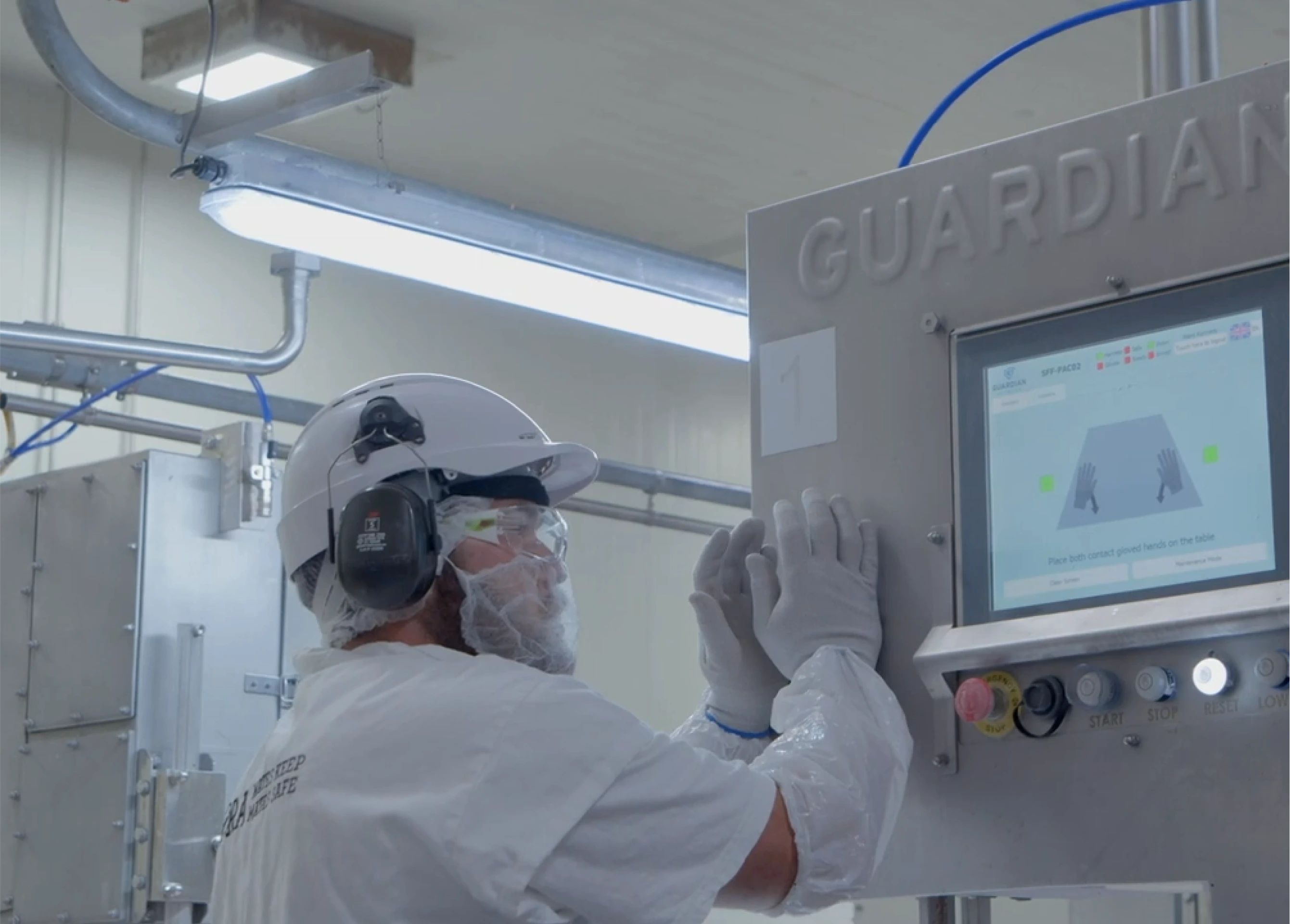
What differs between machines is what happens when a hand slips anyway. Guardian's analysis of OSHA severe injury reports from 2015 to 2025 found that the single most dangerous place to operate a bandsaw in the United States is the supermarket meat department, and that the dominant injury narrative is a hand slipping during a normal feed rather than anything reckless. Passive guards cannot reach that moment. A vision-based system watches the zone around the blade and stops it in about 12 milliseconds when a gloved hand crosses into it. See the full injury analysis.
Price, and the cost after the price
Purchase price is the visible number; the ones that decide the total are blade consumption, cleaning labour, servicing and downtime, and what a single injury costs. Ask each supplier what a year of consumables and scheduled servicing looks like for your run hours, and whether service is remote-capable or requires a technician on site.
Why not to buy second-hand
A second-hand butcher bandsaw carries two risks you cannot inspect away. You cannot verify how it was cleaned and sanitized in its previous life, and you cannot be sure it still has — or has ever had — the guarding and safety features it shipped with. For a machine that both touches food and can amputate, that is a poor place to save money.
Which machine is right for you
Once you know your largest cut, your space and your run hours, the choice usually resolves by setting:
- Processing plants and high-volume boning rooms need capacity, duty cycle and wash-down rating first. Guardian's meat bandsaws run from the G300 through to the G900 for this work.
- Butcher shops and grocery meat rooms are usually constrained by footprint and cleaning time rather than capacity. That is what the Guardian Lite and the rest of our butcher bandsaws are built around.
Frequently asked questions
What is the best meat bandsaw?
There is no single best machine, because the constraint differs by site. Match capacity to your largest routine cut, footprint to your room, and duty cycle to your run hours — then compare on cleaning time, blade availability and what the machine does when an operator's hand slips. A plant and a retail meat room will correctly reach different answers.
How many teeth per inch is good for a bandsaw blade for meat?
Pitch follows thickness, not the material alone. The governing rule is to keep at least three teeth in the material at all times, so a thicker, bone-in cut takes a coarser pitch than thin boneless product. Use your blade supplier's pitch chart against your thickest routine cut rather than running one pitch for everything.
What are the safety precautions for using a meat bandsaw?
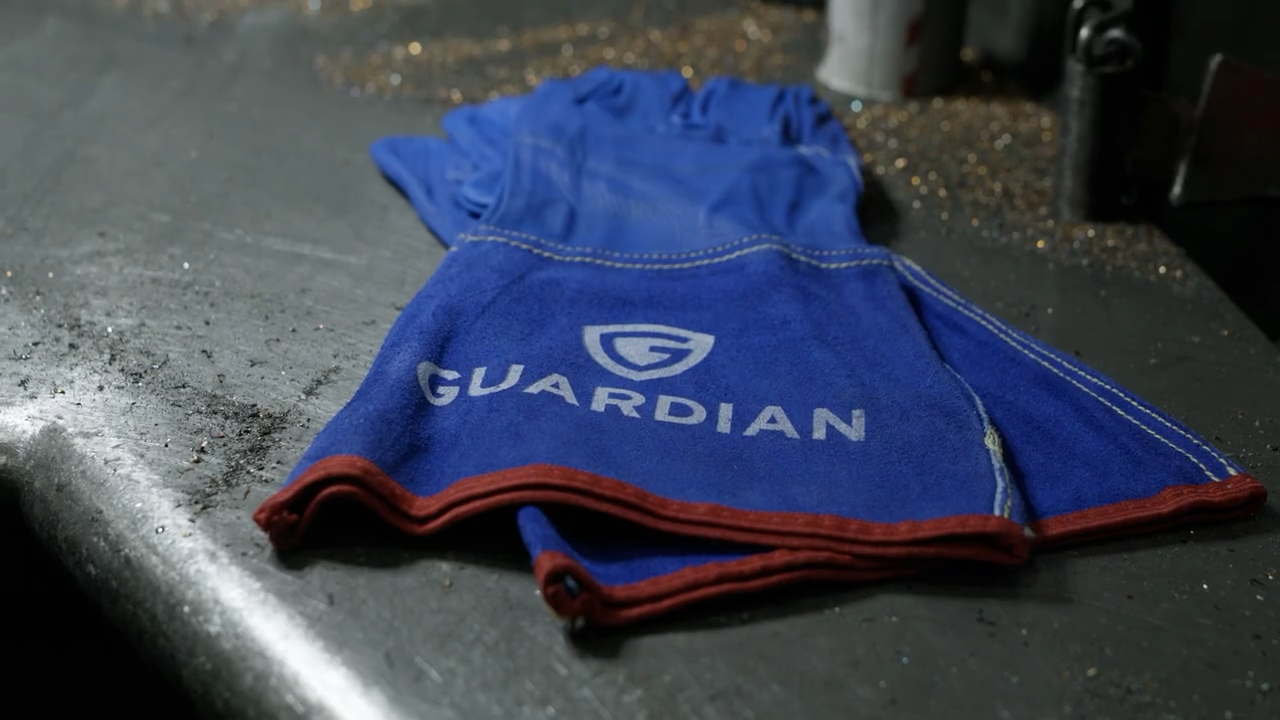
Guards in place and the upper guide set close to the workpiece; hands out of the line of cut; a push device for small or awkward pieces; the blade fully stopped and the machine locked out before clearing a jam, changing a blade or cleaning. Gloves follow your site policy — where they are required they must fit snugly, because a loose glove near a moving blade is an entanglement hazard.
Should I buy a used butcher bandsaw?
We would not recommend it. You cannot verify the cleaning and sanitation history, and you cannot be certain the guarding and safety features are complete and unmodified.
General guidance for buyers, not a substitute for machine-specific training, your site's food-safety procedures, or the manufacturer's manual. Injury statistics: Guardian analysis of OSHA Severe Injury Reports, 2015–2025.