Foundry cleaning room injuries: assessing bandsaw safety
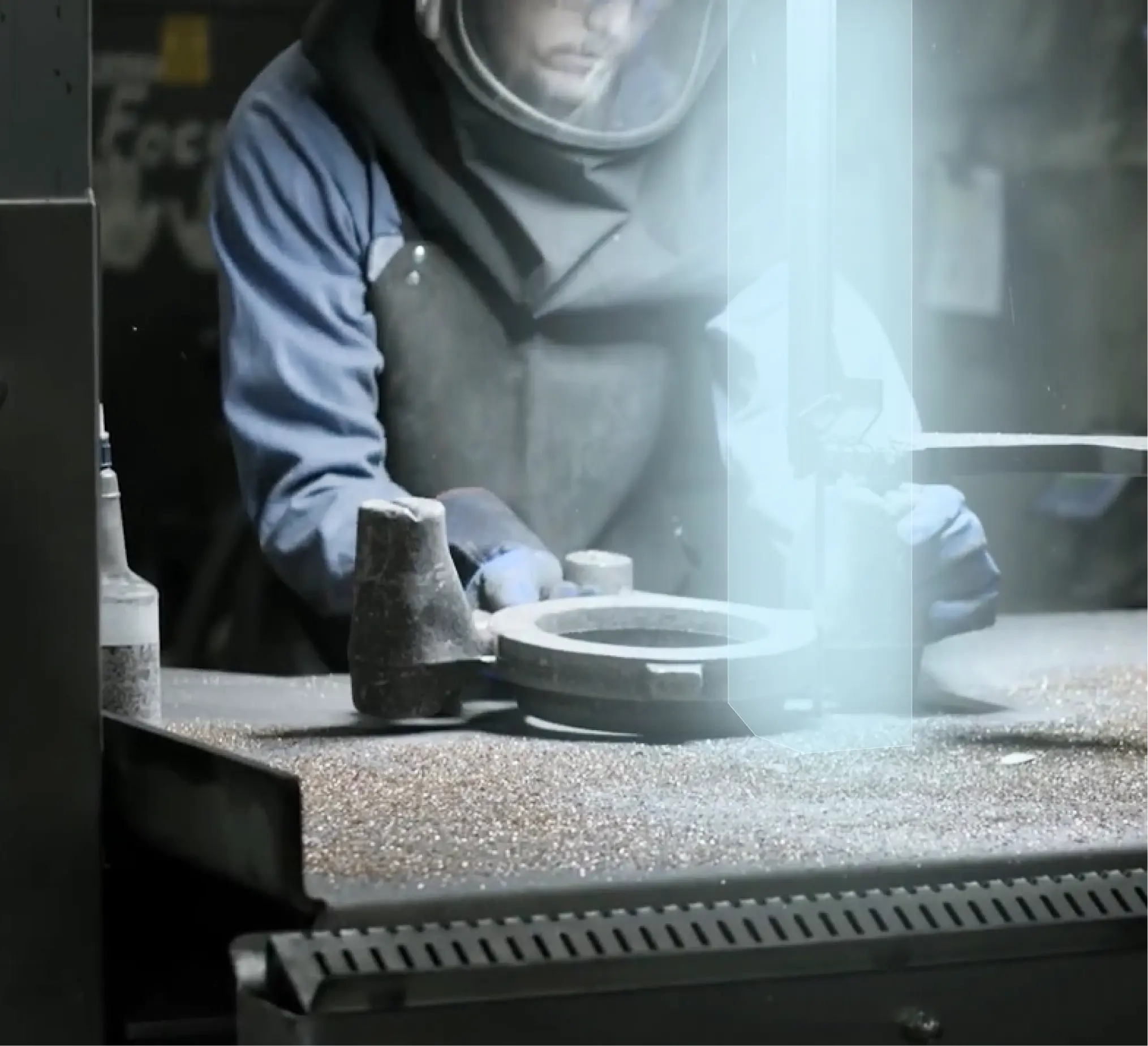

In a foundry cleaning room, removing gates and risers can bring heavy, irregular castings and an operator's hands close to a cutting hazard. A vertical bandsaw may suit the job, but its suitability depends on the material, workholding, handling arrangements and safeguards. Vision-based blade stopping can add a protective function; it does not make the whole task risk-free.
For a plant or safety manager assessing an upgrade, the useful question is specific: can this machine cut the actual casting with a controlled feed method, effective safeguards and a workable plan for setup, cleaning and maintenance?
Start with the casting and the cut
A small change in casting shape can change how the work is held. A protrusion may obstruct a fixture. An uneven base may allow rotation. A heavy offcut may shift as the cut finishes. Review the complete movement of the part, not just whether it fits beneath the upper guide.
The approved method should define support, orientation, workholding and the position of both hands throughout the cut. Where mechanical handling or another person is required, establish the arrangement and communication before starting. Do not expect an operator to catch a falling offcut or stabilize a shifting casting beside the blade.
Blade specification and machine settings must suit the alloy, section and intended process. A machine that can physically accept a casting is not necessarily suitable for cutting it. Confirm the application with the supplier using representative parts and the proposed production conditions.
For application-specific equipment discussions, start with the foundry bandsaws page and provide the parts and tasks the machine needs to handle.
Review hazards beyond blade contact
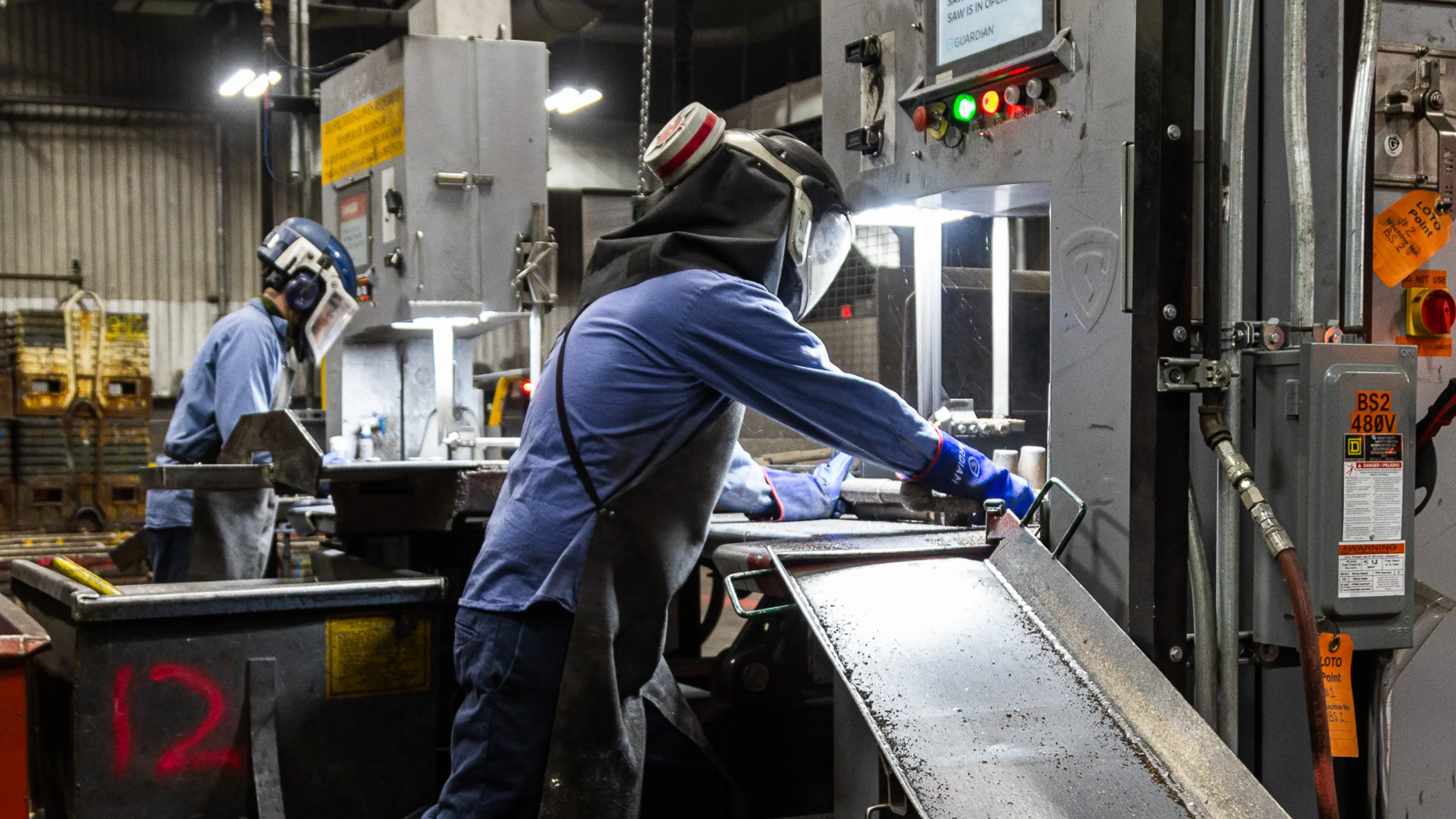
The blade is an obvious hazard, but it is not the only one. The task assessment should consider sharp edges, residual heat, workpiece movement, manual handling, pinch points, chips, noise and airborne contaminants where present. Cleaning and maintenance can introduce different exposures from production.
The appropriate controls depend on the foundry process and material. Specify suitable workholding and handling arrangements, assess extraction or other exposure controls, and select PPE for the remaining hazards. Do not assume that a camera-based safety system addresses dust, noise, hot castings or dropped loads.
OSHA's general machine-guarding standard provides a US framework for protecting against accessible machine hazards. The full set of applicable requirements depends on the operation and jurisdiction; a product demonstration does not establish compliance.
Keep physical guarding part of the solution
Required blade and wheel enclosures must be present and secure. Set adjustable protection for the workpiece using the machine instructions. Assess the cutting area together with fixtures, push tools, carriages and supports so the operator can finish the task without an unsafe reach.
If the guard obstructs the intended cut, stop and resolve the method. Repeatedly removing protection to accommodate awkward parts is evidence that the process needs review. A different fixture, machine configuration or cutting process may be necessary.
The guide to blade guards explains how physical guarding and stopping systems perform different functions.
What vision-based blade stopping adds
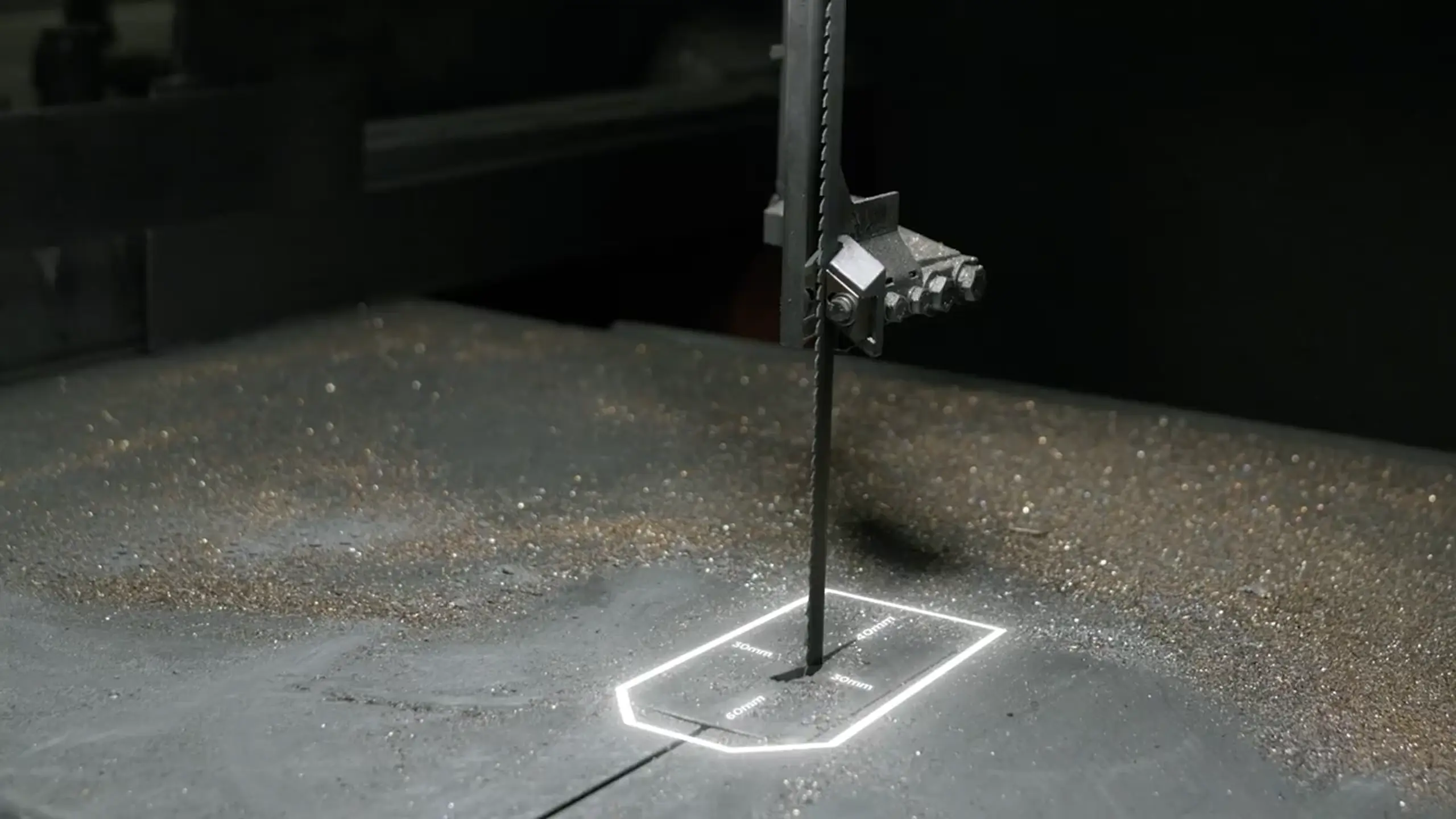
Guardian describes a vision-based system that monitors a defined area near the blade and detects approved safety gloves entering that area. Detection triggers the machine's stopping function under the conditions specified for the installed model.
This provides a different protective function from a fixed barrier. Its effectiveness depends on the complete system: detection coverage, required PPE, configuration, condition, tests and stopping performance. The work method must remain within the machine's intended use and the system's documented limits.
Do not reduce the evaluation to a single stopping-time number. Ask where measurement starts and ends, which model and conditions the result describes, and what assumptions apply to the movement of the hand and workpiece. A blade-stop specification alone is not a guarantee of an injury-free outcome.
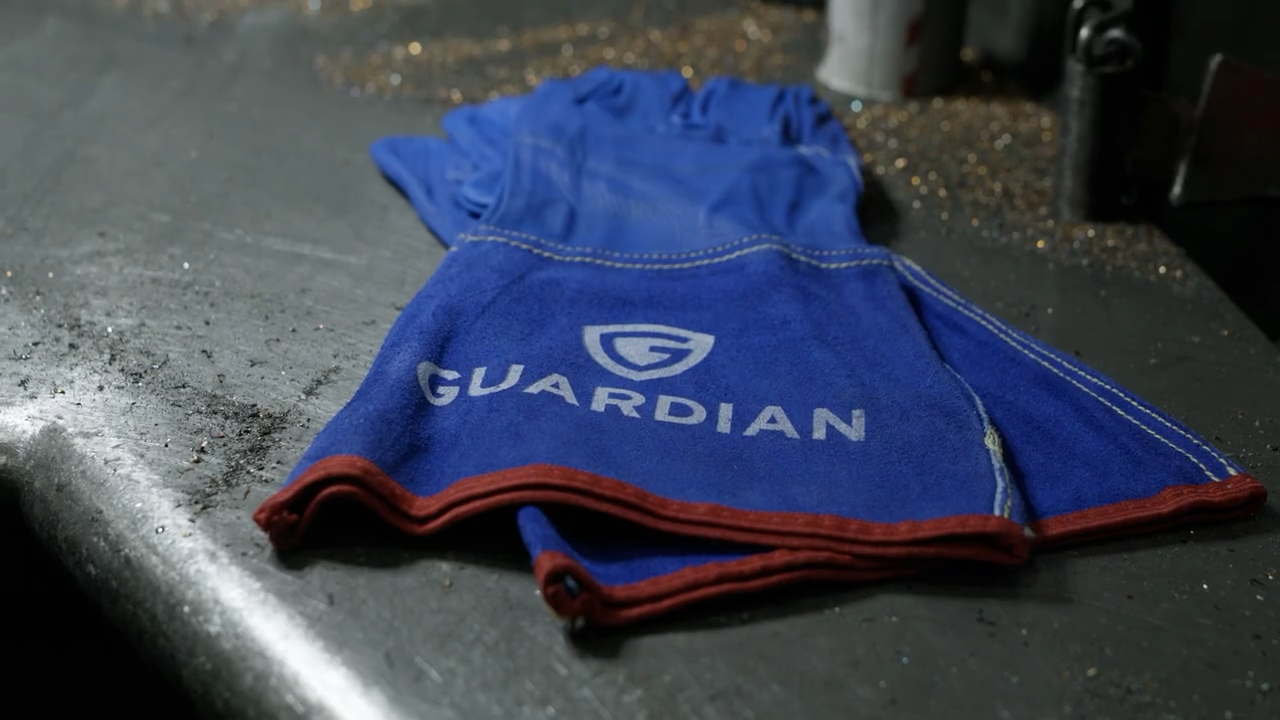
Operators still need authorization and training. They must understand the permitted glove specification, fault indications, required checks and reset process. Never test a safety system with a body part near the blade, and never bypass it to keep production running.
Assess the actual application with the supplier
Bring representative castings and define the permitted cut sequence. A useful assessment should show how the part is loaded, supported, fed, separated and removed. It should also show how the setup changes between parts and what happens when a cut cannot proceed normally.
Ask the supplier to document:
- The materials, dimensions and tasks the configuration is intended to handle.
- The workholding and handling arrangements needed to control the complete cut.
- Required guards, safety-system PPE and detection limitations.
- Prescribed safety checks, acceptance criteria and fault responses.
- The machine-specific isolation and maintenance requirements.
- Training, service support and the criteria for returning the machine to use after work.
Demonstrations should use the manufacturer's controlled test methods. A successful demonstration on one casting does not automatically validate every part family or production condition. Record the approved scope and reassess significant changes.
The existing Clow Valve video illustrates a customer application. It should be read as an example of that installation, not proof that every foundry can use the same method or achieve the same outcome.
Plan cleaning and maintenance before commissioning
A practical safety review includes how people will clear a jam, change a blade, remove accumulated material and service the machine. Those tasks can expose a person to unexpected startup, stored energy and sharp stationary parts.
Authorized people must follow the machine-specific lockout/tagout (LOTO) procedure. An emergency stop or a detection-system stop does not isolate energy. The procedure needs to identify the sources, isolation points, stored-energy controls, verification and safe restoration of service, as required by the applicable framework, including OSHA 1910.147 where it applies.
Access and maintainability affect how workable that procedure is. Ask how long routine tasks take, which tools and qualifications they need, and which checks follow maintenance. Establish responsibility for defects and spare parts before the machine enters production.
Build the business case around the task
A purchase decision should compare the proposed process with the current one using the plant's own evidence. Consider handling, cut quality, cycle time, maintenance, training, unplanned downtime and the exposures the change is intended to reduce. Record assumptions rather than treating a generic injury-cost figure as a prediction for the site.
The severe injury data report provides context for why hand exposure deserves attention. Its selected report counts do not measure the injury probability of a particular foundry or demonstrate the performance of a specific product.
The strongest decision is one the operations and EHS teams can both explain: the machine suits the work, the method is controllable, the safeguards are effective for the identified hazards, and the site can maintain those conditions over time.
Common foundry cleaning-room questions
Does a vision system replace physical guards?
No. Keep the required guards and assess the complete task. A detection and stopping function does not remove other machine or process hazards.
Can any glove be used with the system?
Do not assume so. Use the exact manufacturer-approved specification for the installed system, together with the site task assessment and inspection requirements.
Can a vertical bandsaw cut every casting?
No. Suitability depends on the material, geometry, machine configuration, blade, settings and a controlled feed method. Confirm the application and permitted scope before production.
What should be checked after a safety-system activation?
Follow the manufacturer's response and reset instructions. Determine why the activation occurred, correct any unsafe condition and complete the required checks before resuming. Repeated unexplained activation requires investigation, not bypassing.
General guidance, not approval of a particular installation or operating method. Product capabilities must be confirmed against current model-specific documentation. Editorial and regulatory source review: 18 September 2026.