Bandsaw blade guards and stopping systems: what each does
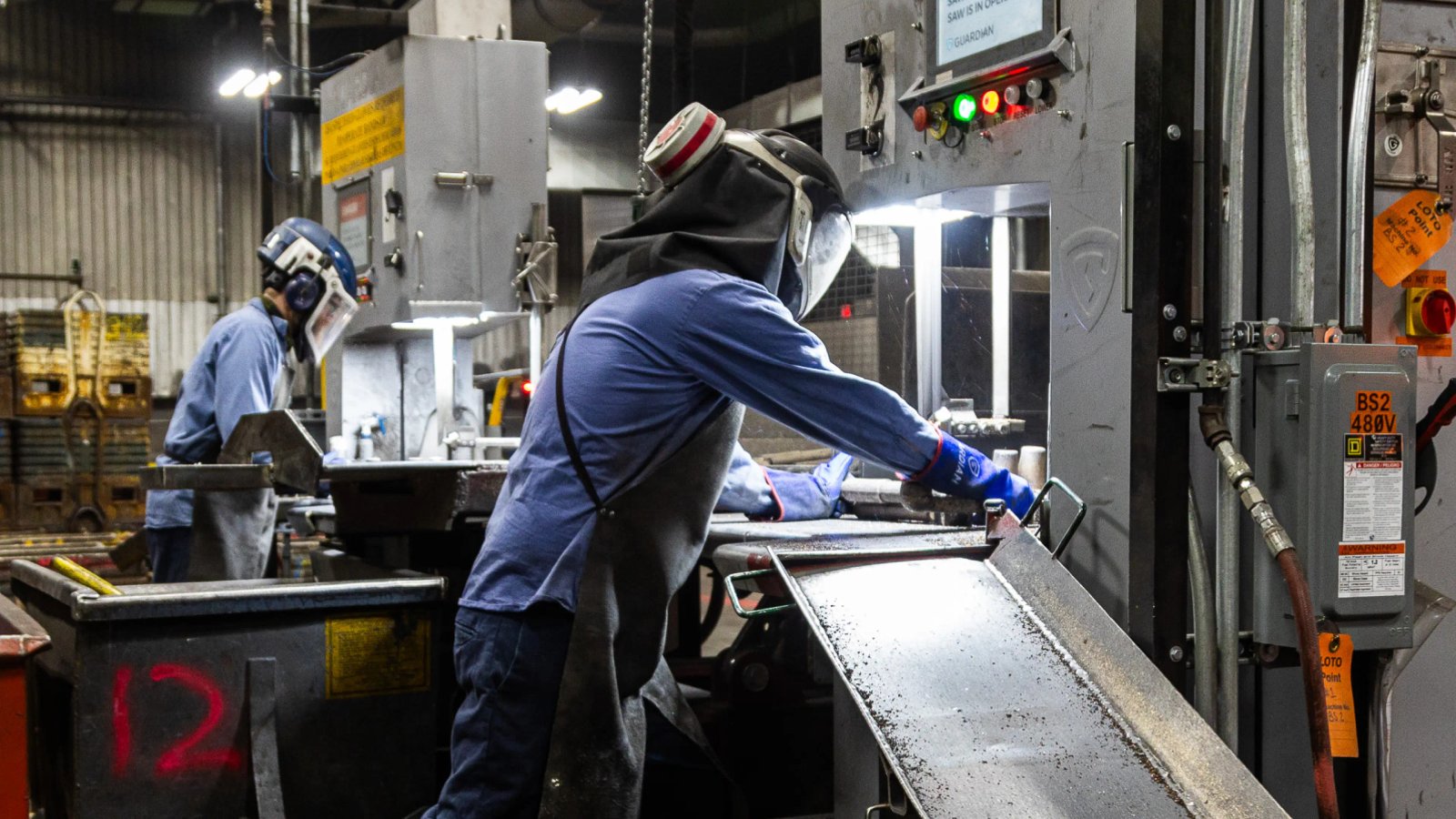

A bandsaw blade guard restricts access to the blade; a blade-stopping system responds to a defined event by stopping it. They perform different jobs. A machine assessment must consider both normal cutting and the times when somebody sets up, cleans, clears or services the saw.
What is a bandsaw blade guard?
On a vertical bandsaw, guarding includes the adjustable protection above the workpiece and fixed enclosures around other accessible blade and wheel hazards. The adjustable guard should expose only the blade needed for the cut, using the setting specified in the machine manual. Wheel covers and return-blade enclosures protect different areas and must remain fitted and secure.
The upper blade guide is not necessarily the guard, although the two may share an assembly. A guide supports the blade. A guard restricts access to a hazard. When checking a machine, identify each component by its actual function rather than assuming that anything beside the blade is protective guarding.
The cutting area needs particular attention. An opening that admits the workpiece can also leave a route for a hand to approach the cutting edge. That is a reason to assess workholding, feed devices and additional protective measures. It is not permission to accept an uncontrolled point of operation.
What guards do during normal cutting
A correctly selected and installed guard can prevent access to the hazard it encloses or shields. Its effectiveness depends on its shape, position, security and the way the job is carried out. A guard set for a tall workpiece can leave unnecessary exposure when the next piece is much smaller.
Before starting, confirm that the required enclosures are closed, the adjustable guard is correctly positioned and any interlock works as specified. Follow the manufacturer's controlled test procedure; do not use a hand or another body part to test a safety function. A failed check is a stop condition.
Inspect how the cut finishes. The feed method should keep hands away as the stock separates, not only while the operator first presents it to the blade. Suitable push tools, fixtures, carriages and supports may be needed. Their design should help the operator maintain control without introducing a new trapping or entanglement hazard.
Where guarding repeatedly prevents the intended work, have the task and machine reviewed. Removing a guard to get a job through changes the risk. A better fixture, another process or a different machine may be necessary.
Guards and blade-stopping systems compared
Do not interpret this comparison as a choice to remove guarding when a stopping system is installed. The complete machine must meet the applicable requirements and provide effective protection for its intended use.
What OSHA requires for bandsaw guarding
For woodworking machinery, 29 CFR 1910.213(i) specifies enclosure of the blade except the working portion between the guide rolls and table, enclosure of the wheels, and guarding for the blade section between the sliding guide and upper wheel guard. It also addresses blade tension indication and feed-roll protection on resaws. These are woodworking provisions; quoting this section alone does not establish compliance for a meat or metal application.
OSHA's general machine-guarding rule, 1910.212, addresses protection from hazards such as the point of operation, ingoing nip points, rotating parts and flying material. Determine which provisions apply to the actual machine and work, including any state-plan requirements. A manufacturer's product description is not a legal determination that a particular installation complies.
The wider OSHA bandsaw requirements guide covers the compliance context beyond the guard itself.
What to inspect when the guarding needs improvement
Start at the actual task. Observe setup, loading, cutting, unloading and cleaning through an approved assessment process. Ask where a person can reach, where material may move unexpectedly and whether the operator can complete the job while the safeguards remain effective.
- Identify every accessible blade, wheel, drive and pinch-point hazard.
- Check that guards are appropriate to the machine and securely mounted.
- Confirm that adjustable protection can be set for every permitted workpiece.
- Review the tools and supports used at the end of the cut.
- Check how interlocks and any guard-locking functions are maintained and tested.
- Identify tasks that require hazardous-energy isolation and who may perform them.
- Record defects, corrective actions and the criteria for release back to service.
Do not fit a generic replacement guard solely because its dimensions appear to match. Changes can affect access, blade clearance, workholding, extraction and safety-system behavior. Involve the manufacturer or a suitably competent machinery specialist before modifying the arrangement.
For maintenance managers, repeated damage or frequent bypass attempts are useful evidence. Investigate whether the guard is unsuitable, the task has changed or the approved method is impractical. The solution must make protected operation workable as well as define what operators must not do.
Where vision-based stopping fits
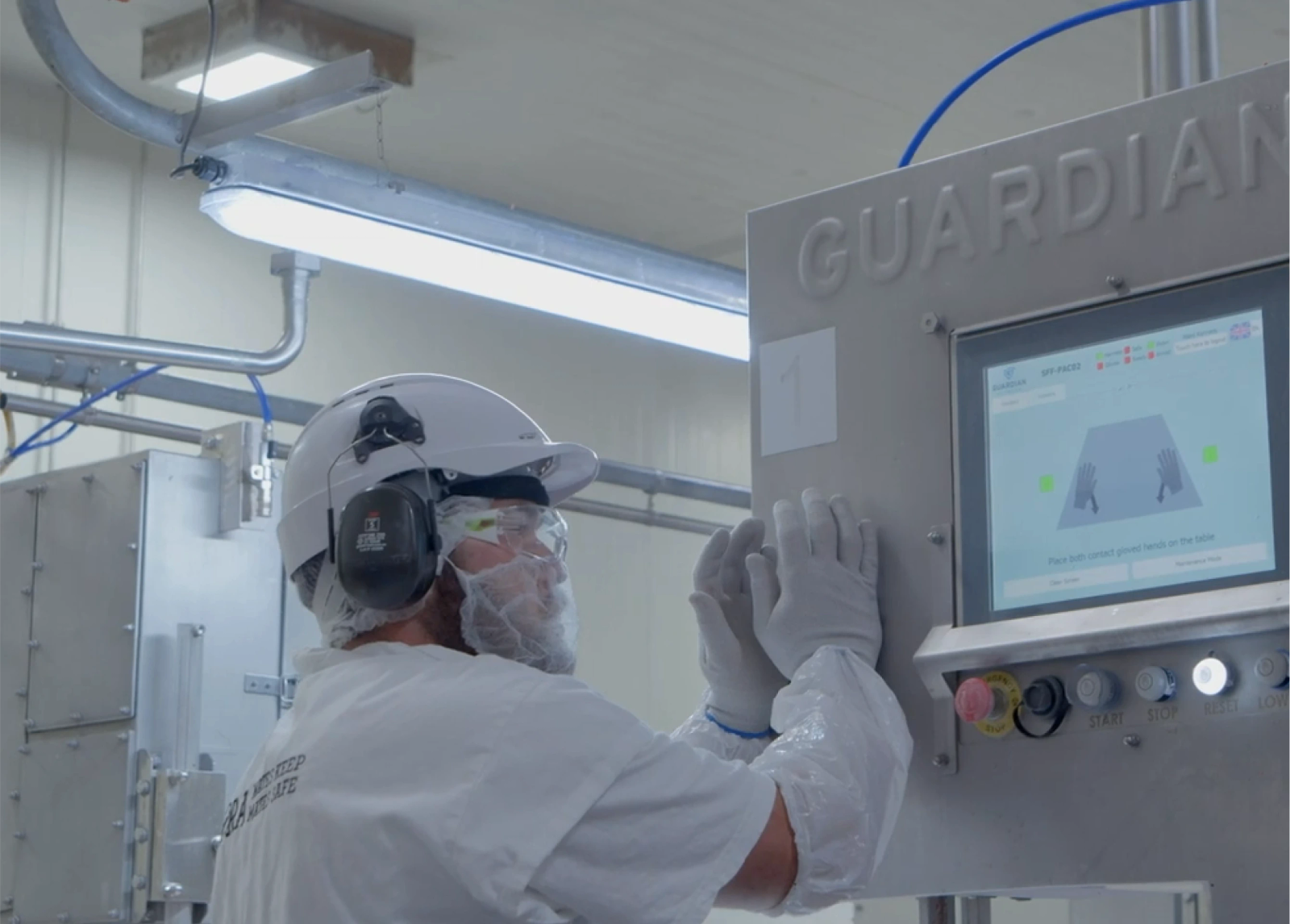
Guardian describes a vision-based system that monitors a defined area near the blade and responds to approved detectable gloves entering that area. Its role is to add a protective function to the machine. The installed model's instructions determine coverage, required PPE, tests, maintenance and limitations.
Do not assume that any glove will be detected, that all approaches to the blade are covered or that a published blade-stop time represents total time from a hazardous movement to standstill. Detection, processing, braking and the movement of the person and workpiece all matter when evaluating the complete event.
A supplier demonstration should explain the specified conditions and the limits as clearly as the activation itself. Ask what happens after a fault, how restart is controlled and how the system behaves during the materials and jobs you intend to run. Never attempt a body-part test to find those limits yourself.
See the video demonstration for an introduction, then obtain the current technical documentation for the model under consideration. A video is not an acceptance test for a site's installation.
Stopping does not make servicing safe
Closing a guard, pressing an emergency stop or activating a detection system does not isolate all energy. Blade changes, jam clearing, cleaning and servicing can expose a person to unexpected startup or stored energy even after the blade has stopped.
Authorized personnel need the machine-specific lockout/tagout (LOTO) procedure. It must cover the sources and isolation points, stored-energy controls, verification and safe restoration of service. OSHA's 1910.147 framework is relevant to covered US servicing and maintenance; it should not be reduced to “press stop and put on a tag.”
Common questions about bandsaw guards
Do bandsaws need a guard?
Accessible machine hazards need effective protection under the applicable requirements. On a vertical bandsaw, assess the cutting area as well as the blade, wheels and drive components. Do not operate with required guards missing or defeated.
How low should the upper guide be set?
Set the guard and guide as the manufacturer specifies for the workpiece, minimizing unnecessary exposed blade. Adjust with the machine stopped and apply isolation as required. A generic gap quoted online is not a substitute for the machine instructions.
Can a guard prevent finger contact?
A suitable guard can prevent access to the area it protects. It cannot be assumed to prevent every contact through every opening during every task. Review the complete feed method and other required controls.
Is a blade brake a guard?
A brake stops motion; a physical guard restricts access. A safety system may integrate several functions, but a brake is not automatically a substitute for guarding or an energy-isolation device.
General guidance for vertical bandsaws. This article does not certify a machine or installation, replace a risk assessment or provide a complete statement of law. Regulatory sources checked 18 September 2026.